Presence: why a virtual lake can feel real
Presence is the feeling of being somewhere you are not. This explainer looks at the ingredients that create it in VR fishing and the small things that break it.

What presence means in VR
Presence is a term VR players and designers use for the sense of really being in a virtual place. It is different from immersion in a book or film. When presence works, your body reacts as if the space is real. You might lean to look past a tree or step back from the edge of a dock.
Fishing is well suited to this. The activity is slow, so you have time to notice your surroundings. There is little on-screen information to remind you that it is a game. And the core action, casting a rod, maps closely to a real movement.
Presence is not constant. It grows and fades during a session. Understanding what supports it helps you enjoy it more.
Head tracking and a sense of scale
The first ingredient is head tracking. When you turn or tilt your head, the view changes exactly as you expect. Your brain uses this to judge distances and size. A lake stops looking like an image and starts looking like a space with depth.
Scale adds to this. In VR, a tall tree feels tall, and the far shore feels far. A fish brought close to your face feels close. Flat screens show size, but VR lets you feel it through your own viewpoint.
Try this: during a quiet moment, crouch down near the water's edge. The change in perspective often makes the scene feel more physical.

Sound that places you by the water
Sound is easy to overlook, yet it does a lot of work. Spatial audio lets you hear where things are. Water lapping to your left, a bird behind you, wind in trees ahead. Turn your head and the sounds shift with you.
This matters because sound surrounds you even when you are looking at the line. It keeps the whole space alive outside your field of view. Good headphones or a well-fitted headset audio strap make a clear difference.
If you usually play with low volume, try a session with it a little higher in a quiet room. Many players find the atmosphere becomes much richer.
Your hands and the feeling of the rod
When your virtual hands move exactly like your real ones, your brain starts to accept them. Holding a rod, turning a reel and lifting a fish all reinforce the idea that you are acting in this space.
Controller vibration adds another layer. A bite becomes something you feel, not just see. Even simple vibration can be surprisingly convincing when it is timed with what happens on the water.
The rod also helps because it has a real counterpart in your hand. The controller's weight and grip are not the same as a real rod, but they are close enough for the mind to fill in the gap.
What breaks presence and how to protect it
Small things pull you out. A loose headset that shifts. A controller losing tracking. Someone speaking to you in the room. A notification sound. Bumping into furniture.
You can reduce most of these. Fit the headset well. Play in a room with even lighting so tracking stays stable. Let people nearby know you are playing. Mute notifications on nearby devices. Clear your play space.
Presence is personal, so experiment. Some players feel it most at dawn scenes, others in rain. Notice when the water feels most real to you and return to those moments. That is often where the game is at its best.
Related articles
 The atmosphere of virtual water
An opinion piece on the atmosphere of virtual fishing spots: light, weather, sound and time of day, and how to choose a spot to match your mood.
Read more
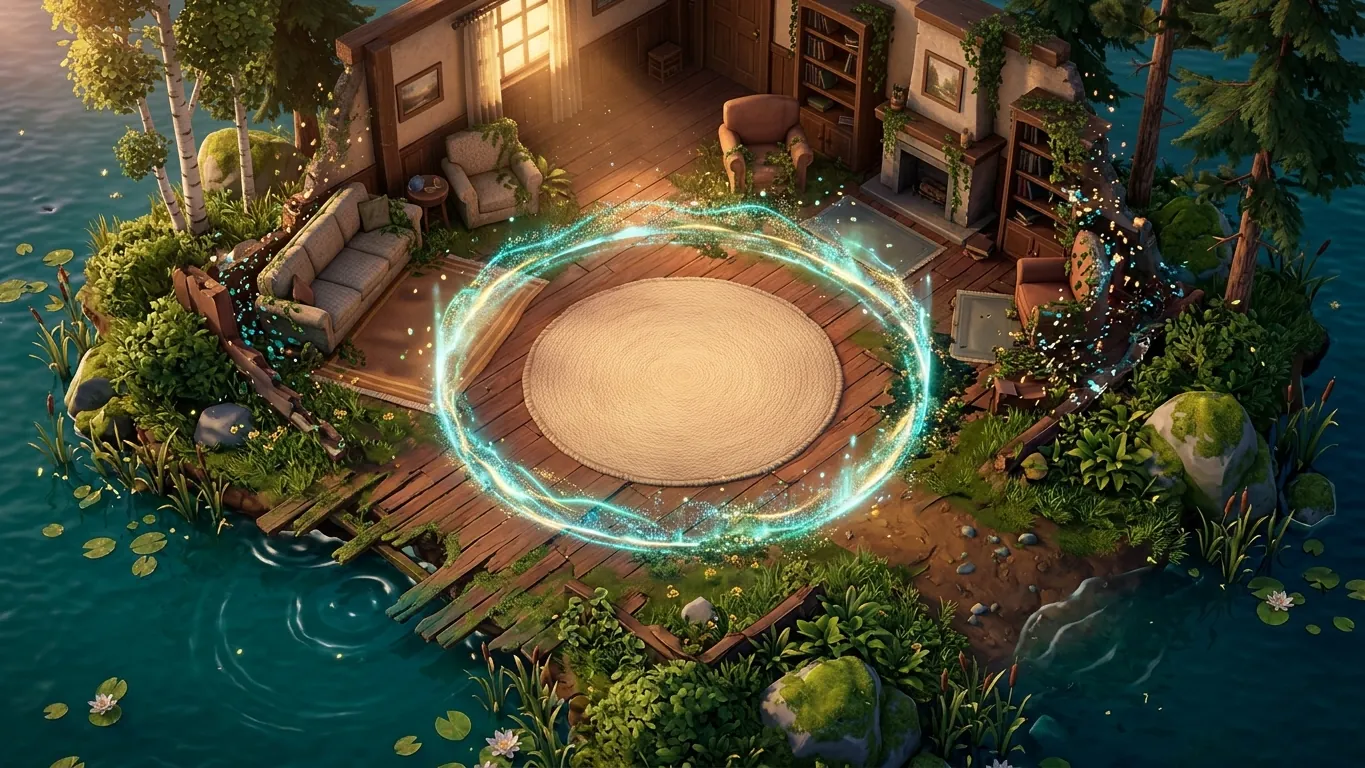 A safe play space for casting in VR
How to prepare a safe, comfortable play space for Real VR Fishing: clearing the floor, setting boundaries, managing cables and lighting for tracking.
Read more
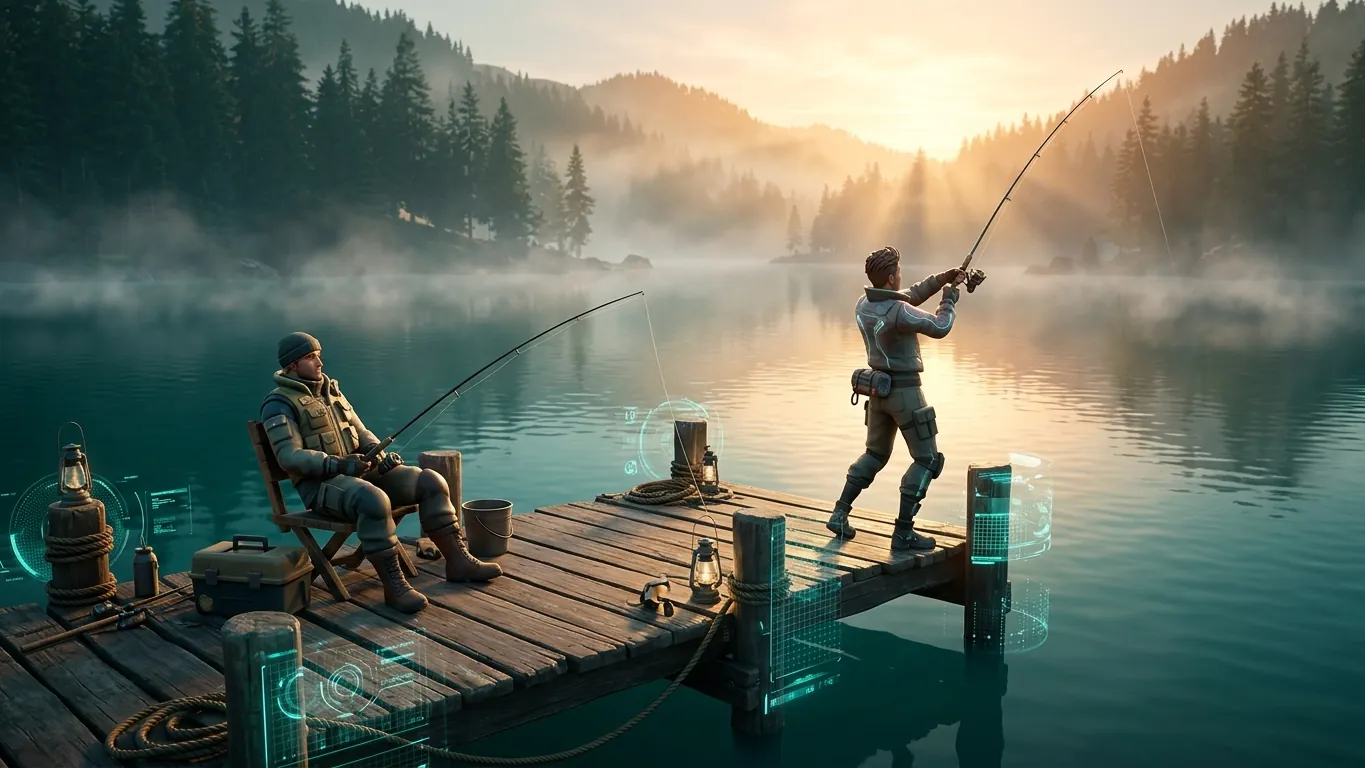 Seated or standing at the virtual shore
Compare seated and standing play in Real VR Fishing: comfort, presence, casting feel and how to set up each stance for calm, enjoyable sessions.
Read more