Seated or standing at the virtual shore
Both stances work for VR fishing, and each has trade-offs. This article compares comfort, presence and casting feel to help you choose for each session.
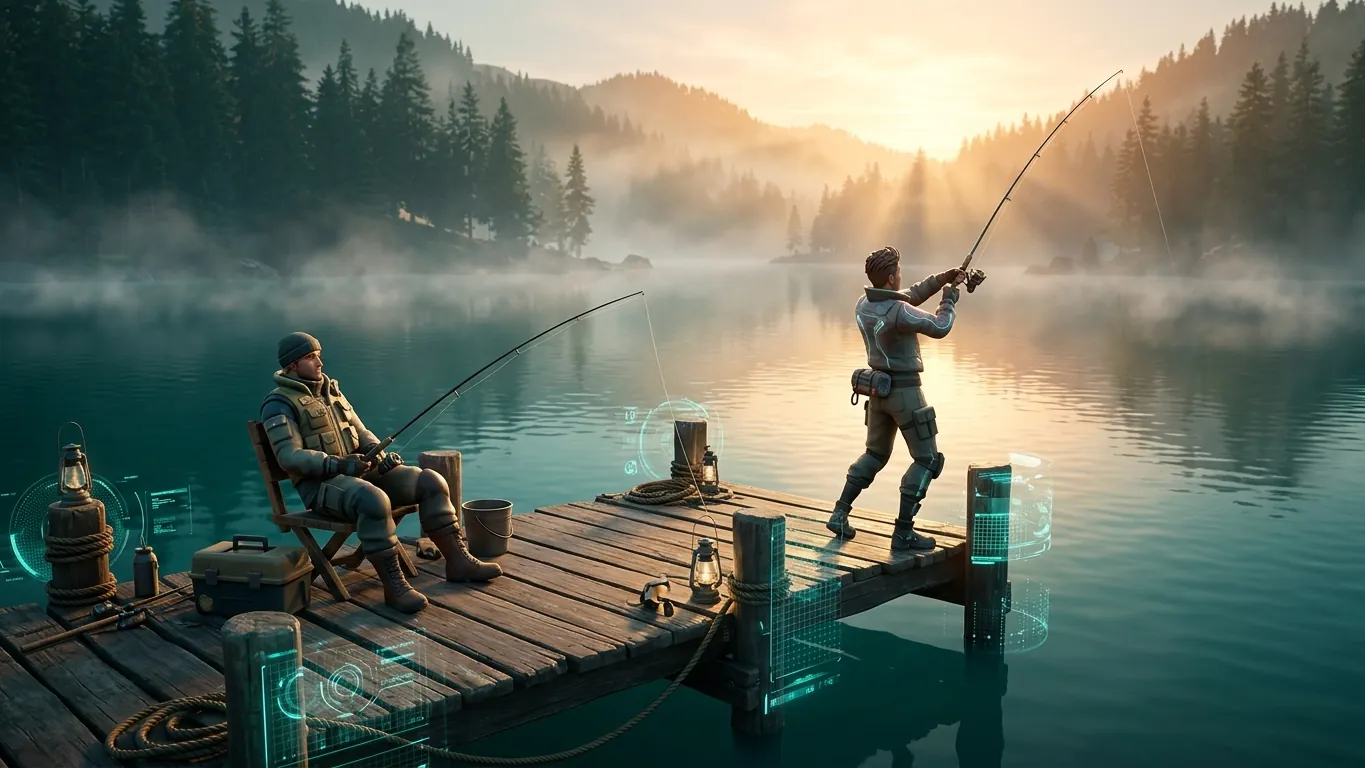
Why stance matters in a calm game
Fishing sessions are often long and slow. That makes your stance more important than in a short action game. A position that feels fine for ten minutes may become tiring after forty.
There is no single correct choice. Many players switch depending on mood, energy and how long they plan to play. Some games and headsets offer specific settings for seated play, so check the options available on your platform.
Below we compare both stances on comfort, presence and casting, then share tips for setting up each one.
Standing: closer to the real thing
Standing often gives the strongest sense of presence. Your eye height matches a real angler on a bank. You can step to the side, lean over the water or turn freely to follow a fish.
Casting also tends to feel more natural standing. You can use your shoulder and a little body rotation, much like a real cast.
The trade-off is fatigue. Standing still for long periods can tire your legs and lower back. A soft mat helps, and so does shifting your weight from time to time. Standing also needs a larger clear play space, so check your surroundings carefully.
Seated: relaxed and sustainable
Sitting suits long, relaxed sessions. It reduces strain on your legs and back and keeps you in one predictable spot, which helps with safety. Many players also find it more comfortable if they are sensitive to motion in VR.
There are some trade-offs. Your eye height is lower, so you may need to recalibrate the floor or use a seated mode if available. Long casts can feel slightly restricted if your chair has armrests. Turning around is harder, so you may rely more on turning options in the settings.
A chair without armrests that does not swivel is often the most practical choice. Swivel chairs can be fun but make it easier to lose track of your real direction.
Casting feel in each stance
Standing casts usually use more of the body. Seated casts rely more on the arm and wrist. Both can be accurate, but the timing may feel different at first.
If you switch stance, take a few practice casts before fishing seriously. Your release point may shift slightly. Start with short casts, then build up distance.
In both stances, keep the controller wrist strap on. Casting motions are quick, and a strap prevents a controller from leaving your hand. Keep your movements controlled rather than wide.
Mixing both in one session
You do not have to pick one. A practical pattern is to stand at the start of a session, when you have the most energy and want the strongest presence, and sit later for quieter waiting.
If you switch, pause the game first. Adjust your position, check your play space and, if needed, recalibrate your height. Then resume. Rushing the switch is where most bumps and tracking oddities happen.
Whichever stance you choose, listen to your body. Take breaks, stay hydrated and stop if you feel discomfort. If discomfort continues, consult a qualified health professional.
Related articles
 In praise of waiting: slow gaming by the water
An opinion piece on why the slow pace of Real VR Fishing is its strength, and how patience, quiet waiting and attention shape a calmer play session.
Read more
 Your first session by the virtual water
A practical guide to your first Real VR Fishing session: headset fit, looking around the shoreline, your first cast and why a short session works best.
Read more
 Casting and reeling with motion controllers
Learn how casting and reeling work with motion controllers in Real VR Fishing: timing, accuracy, line tension and a simple routine to practise.
Read more