Casting and reeling with motion controllers
Motion controls turn every cast into a physical movement. This guide explains timing, accuracy and line tension, with a short practice routine at the end.
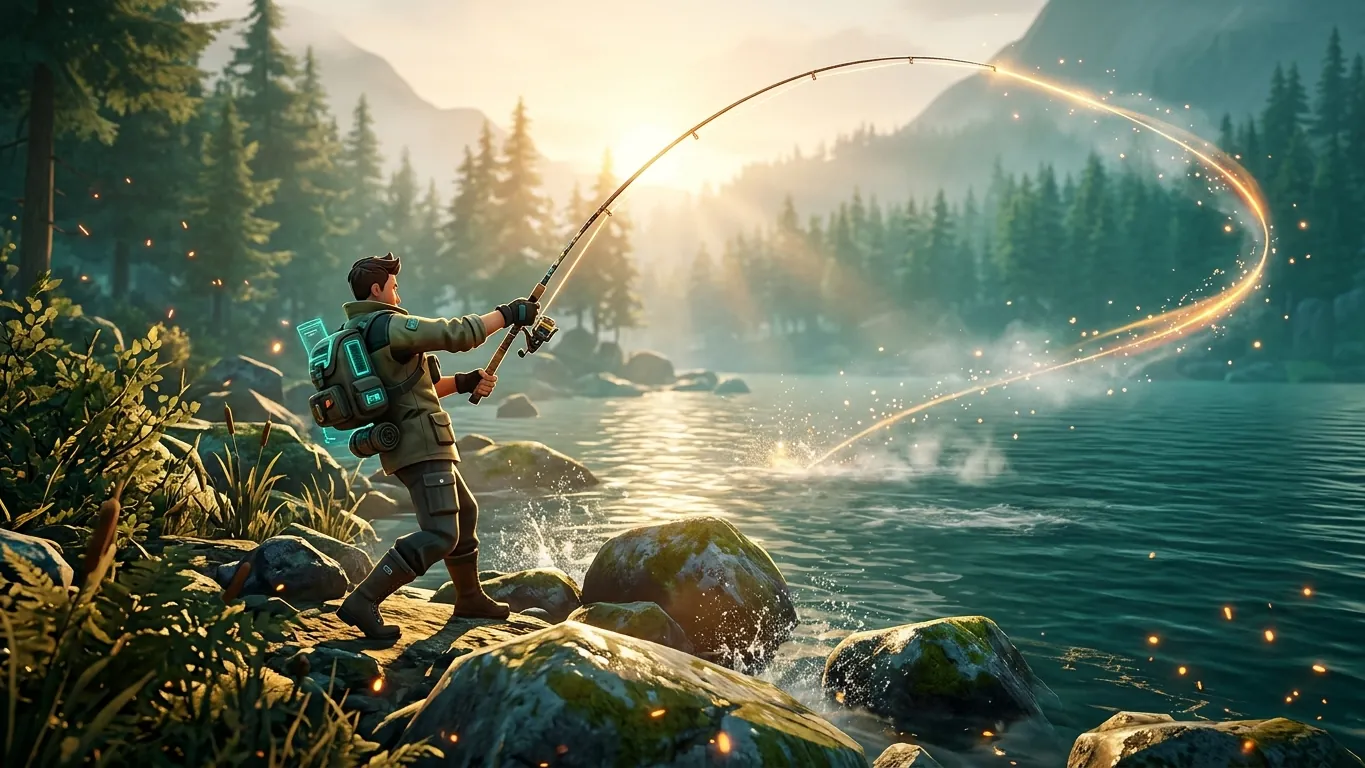
Why motion controls change fishing
In a flat-screen fishing game, a cast is usually a button press and a power meter. In VR, your arm is the meter. The controller tracks the speed and direction of your movement, so the cast reflects what your body actually did.
This is a big part of why VR fishing feels convincing. It also means the learning curve is different. Players who try to throw hard often get worse results than players who move smoothly. Your muscles need a few sessions to learn the rhythm, much like a real cast.
The good news is that the movement is small. You do not need large swings or much space. Most of the work happens in your forearm and wrist.
The cast: timing over strength
A smooth cast has three parts. First, a backswing that brings the rod tip behind you. Second, a forward motion that builds speed evenly. Third, a release at the right moment, using the button the game assigns for it.
Most early mistakes come from the release. Let go too early and the lure flies high and short. Let go too late and it lands close to your feet. Try to release as the rod passes slightly in front of you, then adjust based on where the lure lands.
Accuracy improves when you look at your target, not at the rod. Your hand tends to follow your eyes. Pick a spot, keep your gaze on it and let the movement happen.

Reeling and reading the line
Once the lure is in the water, reeling becomes your main tool. A steady pace keeps the lure moving in a predictable way. Short pauses can make it drift or sink. Experiment to see how different speeds change what happens under the surface.
Watch the line. Its angle and movement tell you a lot. A sudden twitch or a change in direction can mean interest from a fish. Many players also rely on controller vibration to sense a bite. Keep your grip relaxed so you notice small signals.
When a fish takes the lure, avoid reeling at full speed straight away. Keep tension on the line and let the fight develop.
Handling a strong fish
Larger fish pull back. If you reel against them constantly, the line can come under too much tension. Most fishing games model this in some way, so treat tension as a resource to manage rather than an obstacle to overpower.
A simple approach works well. When the fish pulls hard, ease off. When it slows, reel in steadily. Move the rod to the side to change the angle of the pull. The fight becomes a back-and-forth rhythm instead of a contest of speed.
Stay aware of your real surroundings during a fight. It is easy to step forward or swing your arms wider than usual. Keep your movements controlled and inside your play space.
A ten-minute casting practice routine
Use this short routine at the start of a session to warm up your timing.
- 01
Three short casts
Aim for a spot close to the shore. Focus on a smooth motion and a clean release.
- 02
Three medium casts
Pick a target further out. Keep the same rhythm and only add a little speed.
- 03
Three long casts
Try your longest comfortable cast. Note where your release point needs to change.
- 04
Reel at different speeds
On each retrieve, alternate between slow, steady and paused reeling to feel the difference.
- 05
Rest and reflect
Lower your arms for a moment. Think about which cast felt most natural and repeat it.
Related articles
 Comfort tips for longer days on virtual water
General tips for comfortable Real VR Fishing sessions: headset fit, breaks, room temperature, comfort settings and listening to your body.
Read more
 Presence: why a virtual lake can feel real
An explainer on presence in VR fishing: how head tracking, scale, sound and controller feedback make a virtual lake feel like a real place.
Read more
 The atmosphere of virtual water
An opinion piece on the atmosphere of virtual fishing spots: light, weather, sound and time of day, and how to choose a spot to match your mood.
Read more